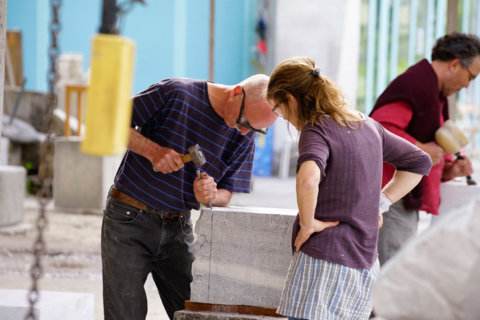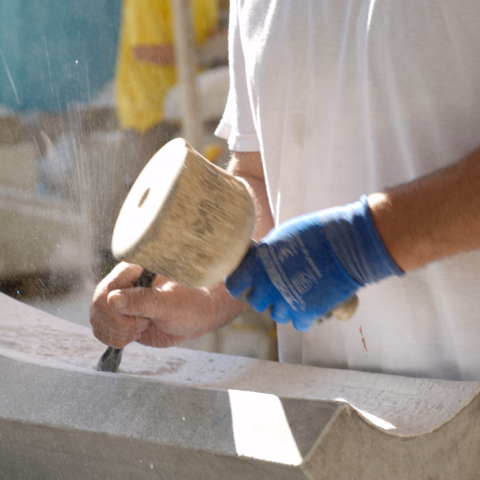


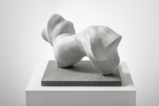
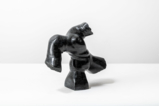
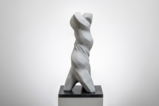
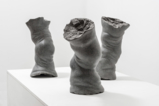
In the advanced sculpture courses, a central design theme takes centre stage. This course invites you to explore Dynamics and Movement as an artistic principle.
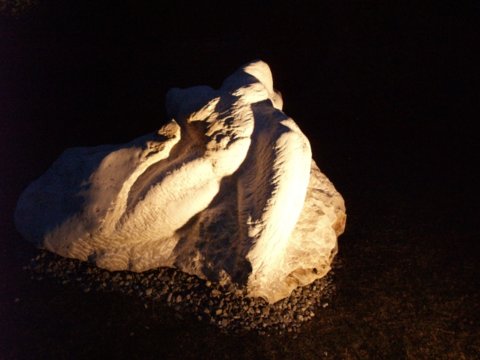
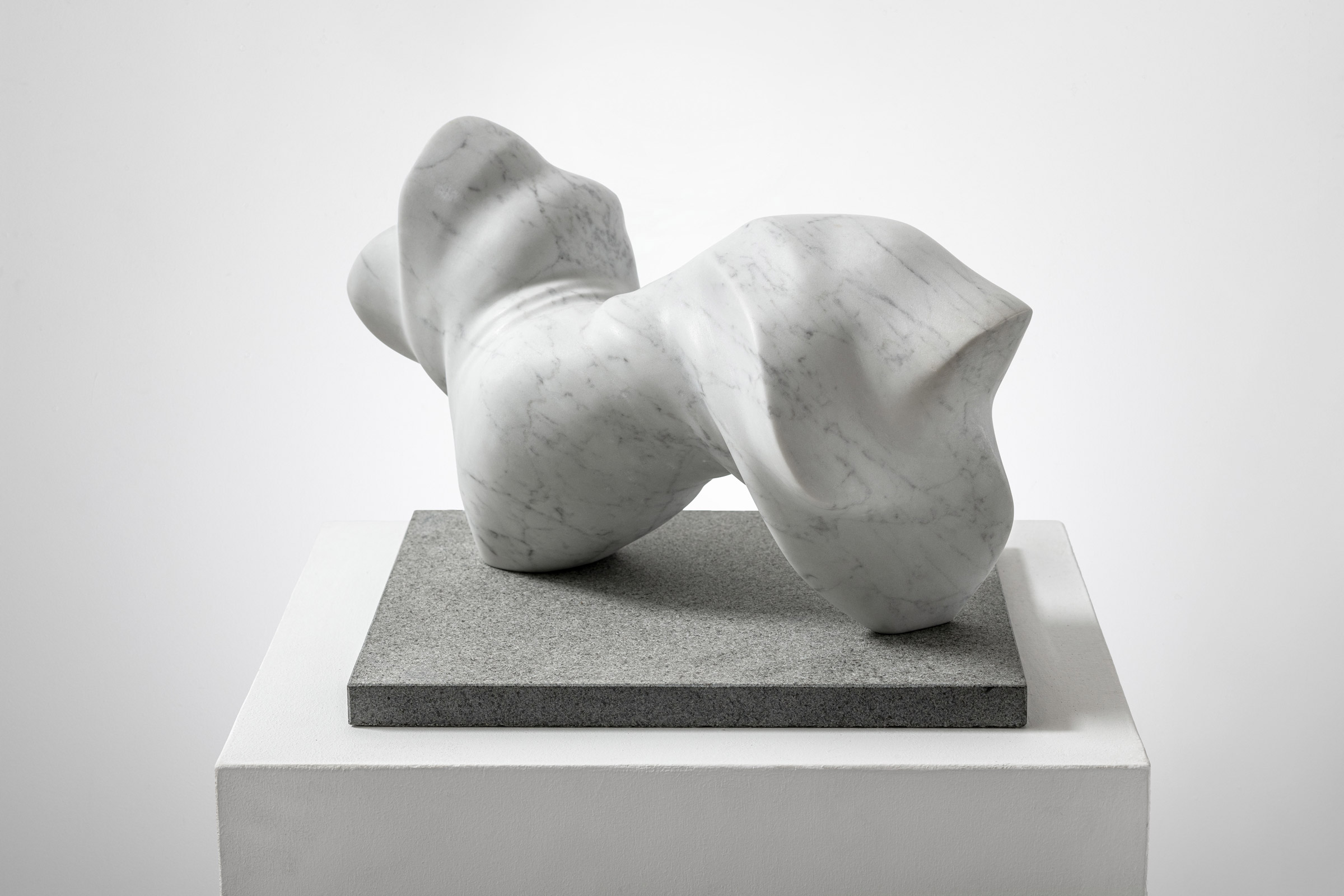
Stone is by nature a static and heavy material. When a boulder rolls down a mountain, it will usually come to rest on its most stable side, lying horizontally and settling into itself. As soon as we turn it, raise it upright or shift it out of its natural balance, however, a sense of dynamism emerges.In this course, we use drawing and modelling to develop a form that will subsequently be translated into stone. The form may be abstract, representational or figurative. The central question is how movement, tension and vitality can be made visible in a static material.
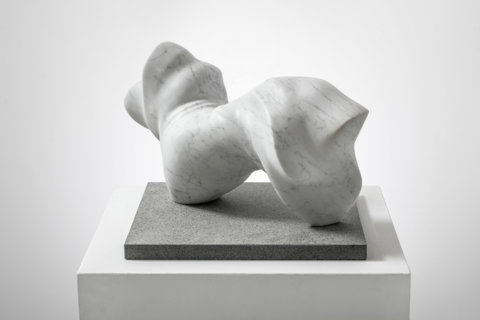
A compelling sculptural form has no clearly defined front or back. Every viewpoint is equally important and reveals a new perspective. Curves, planes, transitions and changes of direction are developed in such a way that they create tension and relate to one another.
Whether the work is conceived in an organic, geometric or figurative way, harmonious proportions and a clear architecture of form are essential. Drawings and models help participants to examine and refine their ideas before translating them powerfully into stone.
Prerequisite for the course: Good stone sculpting skills (must have completed an introductory as well as a basic skills course) and a love for three-dimensional form.
The course language is German, but the tutor also speaks English.
Courses
30.–11.
MayJun